When selecting an above-ground storage tank, whether it is a concrete storage tank or a steel storage tank, it is essential to evaluate the options from multiple technical and economic dimensions. Decisions should not be made based solely on initial construction cost or a single performance indicator. Storage tanks are critical infrastructure in industrial, municipal, and agricultural systems, and their selection has a direct influence on long-term operational cost, safety performance, maintenance requirements, and overall sustainability of a project. A poor selection at the early stage can lead to recurring maintenance problems, unexpected downtime, and significant lifecycle losses.
This article provides a systematic and comprehensive comparison between concrete storage tanks and steel storage tanks from the perspectives of durability, cost, flexibility, safety, environmental impact, construction efficiency, and application suitability, helping engineers and decision-makers develop a more rational and long-term-oriented selection strategy.
The service life of a storage tank is one of the most important indicators affecting investment return. A tank that performs poorly in durability will generate continuous maintenance costs, and in severe cases, may lead to leakage, contamination, or system shutdown. Therefore, durability is a fundamental criterion in tank selection.
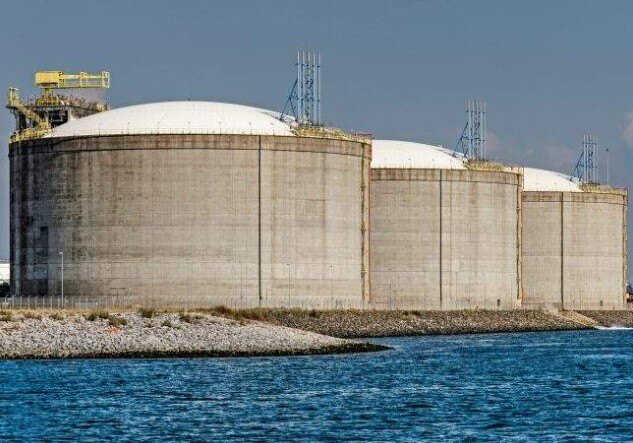
Concrete storage tanks are widely used due to their structural strength and initial cost advantages, but they are prone to long-term durability issues, especially cracking and leakage. These issues arise mainly from the inherent material properties of concrete, which is rigid and lacks flexibility.
Under conditions such as temperature fluctuations, thermal expansion and contraction, ground settlement, or seismic activity, stress tends to accumulate within the structure. Over time, this stress can exceed the tensile capacity of concrete, leading to the formation of micro-cracks. These cracks may initially appear insignificant, but they can gradually expand and develop into leakage pathways.
Although repair methods such as surface sealing or internal lining systems can be applied, they often increase maintenance costs significantly. In some cases, the installation of additional protective liners is required to restore impermeability. However, even after repair, the underlying structural vulnerability remains.
Another concern is the porous nature of concrete. This characteristic allows moisture absorption and can create conditions for bacterial growth, algae formation, and chemical penetration. In water storage applications, especially drinking water systems, this raises serious hygiene concerns. Over time, chemical reactions such as carbonation, sulfate attack, or freeze-thaw cycles can further degrade the structure, reducing service life and increasing leakage risk.
In general, the typical service life of a concrete storage tank is around 40 to 60 years, depending on environmental conditions and maintenance practices.
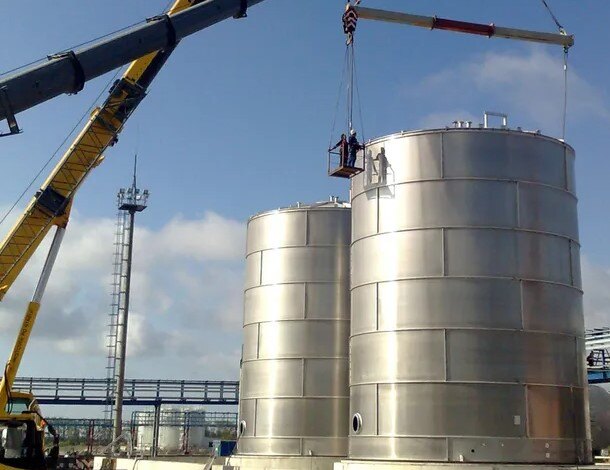
Steel storage tanks, particularly stainless steel tanks, offer significantly higher structural flexibility and resilience. Unlike concrete, steel has excellent ductility, meaning it can withstand deformation without cracking. This property allows steel tanks to absorb stress caused by temperature changes, seismic loads, or operational pressure variations.
Although steel is more susceptible to corrosion compared to concrete, modern engineering solutions such as anti-corrosion coatings, epoxy linings, cathodic protection systems, and stainless steel alloys greatly enhance its durability.
With proper design and regular maintenance, steel storage tanks can achieve extremely long service lives, often exceeding 80 to 100 years. In many industrial applications, steel tanks remain in service far longer than their originally designed lifespan due to their repairability and structural integrity.
Steel tanks also perform well under freeze-thaw cycles and environmental fluctuations, making them suitable for a wide range of climates and operating conditions. This stability significantly reduces long-term structural failure risks.
In addition to structural durability, thermal performance is another consideration. Steel tanks often require external insulation systems to maintain temperature stability. If insulation materials degrade over time, thermal efficiency can decrease.
Concrete tanks, due to their higher thermal mass, naturally provide better thermal inertia. This means they can maintain more stable internal temperatures in some applications. However, this advantage can be offset if cracks or structural defects develop, allowing heat transfer and moisture intrusion.
Cost is often the most influential factor in decision-making, but focusing only on initial construction expenses can lead to misleading conclusions. A proper evaluation must consider the full life-cycle cost, including construction, operation, maintenance, repair, and replacement.
Concrete tanks are often considered more economical at the initial construction stage. This makes them attractive for large-scale infrastructure projects with tight upfront budgets.
However, this apparent cost advantage can be misleading. Over time, maintenance requirements such as crack repair, sealing, structural reinforcement, and leakage control significantly increase operational costs.
Water leakage is a particularly critical issue. In many applications, treated water represents a valuable resource. Any loss due to leakage not only increases financial waste but can also affect surrounding soil and groundwater conditions.
Additionally, when major repairs are required, the tank may need to be taken out of service, resulting in operational downtime and indirect economic losses. Demolition and reconstruction costs at the end of life are also relatively high.
As a result, while the initial cost is lower, the total life-cycle cost of concrete tanks is often significantly higher than expected.
Steel tanks generally require higher initial investment, especially when using stainless steel materials. However, their long service life and lower maintenance frequency significantly reduce total life-cycle costs.
From a total cost of ownership (TCO) perspective, steel tanks distribute costs more efficiently over time. They require fewer major repairs, have lower failure rates, and offer easier maintenance access.
A practical evaluation conducted in a metropolitan water infrastructure project demonstrated this clearly. Over a 45–50 year period, concrete tanks incurred total costs exceeding $1 million, averaging over $30,000 annually. In contrast, stainless steel tanks had total costs of approximately $300,000, with annual costs as low as $6,000–$7,000.
This comparison clearly illustrates that steel tanks, despite higher upfront cost, offer significantly better long-term economic efficiency.
For small and medium-sized projects, prefabricated stainless steel tanks are often the most cost-effective option due to fast installation and low maintenance requirements.
For large-scale storage systems, concrete tanks may still be selected due to their structural capacity and relatively lower initial material cost. However, this must be balanced against long-term operational expenses.
Beyond cost, flexibility plays a critical role in modern engineering design. A storage tank must adapt to changing operational requirements over time.
Steel tanks offer strong customization capabilities. They can be designed with precise dimensions, varied geometries, and flexible internal configurations. Common features include manholes, inspection ports, ventilation systems, and modular connections.
Steel tanks can also be modified after installation. This means that if process requirements change, the tank can be upgraded or expanded without full replacement.
In terms of shape design, steel tanks can be cylindrical, rectangular, spherical, or fully customized. This makes them suitable for complex industrial layouts and space-limited environments.
Concrete tanks are typically constructed on-site using formwork and casting methods. Once completed, structural modification is extremely difficult and costly.
Any major changes to capacity, inlet/outlet positions, or structural design usually require partial reconstruction.
Their design flexibility is also limited, typically restricted to standard geometric shapes such as cylindrical or rectangular structures.
Concrete tanks are permanent installations and cannot be relocated once constructed. Steel tanks, however, can be dismantled, transported, and reinstalled at different locations. This provides significant operational flexibility, especially for temporary or evolving projects.
Hygiene Risks of Concrete Tanks: Concrete’s porous surface can retain moisture and allow microbial growth. Over time, this may lead to algae formation, bacterial contamination, and chemical absorption. Even with surface coatings, complete prevention of contamination is difficult. In drinking water systems, this raises serious concerns about water quality and safety.
Hygiene Advantages of Steel Tanks: Steel, particularly stainless steel, has a smooth and non-porous surface. This prevents microbial growth and chemical infiltration, ensuring higher hygiene standards. For this reason, steel tanks are widely used in food processing, pharmaceutical production, and drinking water storage systems.
Recyclability: Steel is fully recyclable and can be reused repeatedly without significant loss of performance. The steel recycling industry is highly developed and efficient. Concrete recycling, by contrast, is more complex and less economically viable, often resulting in lower reuse rates.
Resource Consumption: Steel production has a more controlled environmental footprint when recycled materials are used. Concrete production, particularly cement manufacturing, is energy-intensive and generates significant carbon emissions.
Long-Term Sustainability: While concrete has good durability and thermal properties, steel offers superior recyclability and lifecycle efficiency. From a sustainability perspective, steel aligns better with modern green engineering principles.
In summary, steel storage tanks generally outperform concrete storage tanks in terms of durability, flexibility, safety, environmental performance, and total life-cycle cost. While concrete tanks may still have advantages in large-scale, low-budget, or permanent infrastructure projects, their long-term maintenance and structural limitations reduce overall competitiveness.
From a life-cycle perspective, steel tanks often reduce annual costs by up to 70–80% compared to concrete tanks over a 45–50 year period. Therefore, for projects requiring reliability, hygiene, sustainability, and economic efficiency, steel storage tanks—especially stainless steel tanks—are often the preferred solution. Ultimately, storage tank selection should not be based on initial investment alone, but on a comprehensive engineering evaluation that considers performance, lifecycle cost, and long-term operational requirements.
