Vacuum technology is something most people encounter in everyday devices like vacuum cleaners and airtight food storage containers. However, in industrial and production settings, the scale and complexity of vacuum technology far exceed what is familiar in daily life. One of the key pieces of equipment in this context is the vacuum tank, a device specifically designed to operate under negative pressure. By creating an environment inside the tank that is below external atmospheric pressure, vacuum tanks use the resulting pressure differential to generate suction, enabling the collection, storage, and transport of liquids, sludge, dust, chemicals, and other materials.
Whether it is handling factory wastewater, cleaning up chemical spills, or removing sludge from construction sites, vacuum tanks serve an irreplaceable role. Yet, many users overlook essential aspects such as design standards, material selection, and safety requirements, which can lead to equipment failure or even accidents. This article aims to provide a clear, systematic overview of vacuum tanks, including their structure, applications, key selection criteria, differences between types, and the advantages of stainless steel construction, helping readers gain a full understanding of this critical industrial equipment.
A vacuum tank is a container designed to operate under negative pressure. Its primary function is to create suction through vacuum pressure, which facilitates the handling, storage, and transportation of various materials, including liquids, sludge, and other substances.
A typical vacuum tank consists of four core components:
- Vacuum System: This system maintains the tank's internal vacuum. When the pressure inside the tank drops below atmospheric pressure, materials can be efficiently drawn into the tank.
- Tank Body: The tank body serves as the storage container. All collected liquids, sludge, or other substances are temporarily held here.
- Pump System: The pump system facilitates the transfer of materials into and out of the tank. It is responsible for drawing materials into the tank and can also discharge them to designated locations.
- Hoses and Valves: Hoses and valves control the flow of materials in and out of the tank. Operators adjust suction and discharge speed and direction by opening or closing these valves.
- Working Process: The vacuum system removes air from inside the tank, lowering the internal pressure below atmospheric levels. A hose is then inserted into the material to be collected, and atmospheric pressure pushes the material into the tank. When discharge is required, the pump system can reverse or otherwise transfer the material out of the tank.
After understanding the basic structure and operation of vacuum tanks, it is essential to explore their practical applications. Vacuum tanks are widely used across multiple industries, covering liquid waste management, industrial operations, emergency response, and construction. While each application has specific requirements, the core function remains the same: using vacuum suction to efficiently collect and transfer materials. Below are the four most common application areas.
Vacuum tanks play a vital role in managing liquid waste. They efficiently collect and handle industrial wastewater, municipal sewage, and various types of wastewater. For instance, municipal vacuum sewer trucks operate based on the principle of vacuum tanks, entering septic tanks and sewage wells to suck waste into the tank and transport it to treatment plants for safe disposal.
Industrial facilities also generate large volumes of wastewater during production, often containing heavy metals, chemicals, or other hazardous substances. Vacuum tanks collect these wastes safely and transport them to treatment facilities, preventing environmental contamination.
In manufacturing, vacuum tanks significantly improve material handling efficiency. Many production processes generate sludge—for example, in electroplating plants, paper mills, and steel factories. Such sludge cannot be discharged directly and requires specialized collection and transportation. Vacuum tanks extract sludge from sedimentation tanks or collection troughs and transport it to disposal or processing sites.
Vacuum tanks are also used to safely handle both hazardous and non-hazardous liquids. Chemical plants may need to transfer liquids from reactors to storage tanks or remove waste chemicals from containers—tasks that vacuum tanks can perform efficiently and safely.
In the event of chemical spills or hazardous material leaks, vacuum tanks are indispensable emergency equipment. Response teams use them to quickly extract leaking chemicals, preventing contamination from spreading. For example, when a tanker overturns on a highway, vacuum trucks can rapidly remove spilled chemicals, reducing harm to soil and water sources.
In environmental remediation, vacuum tanks remove contaminated soil or liquids. Polluted sites may require extraction of soil or groundwater containing harmful substances, which can then be treated at specialized facilities. This process helps companies comply with environmental regulations and avoid penalties for improper disposal.
Construction sites generate large quantities of excess water, sludge, and other materials during operations. Tasks such as pile driving and excavation often encounter groundwater or mud. Vacuum tanks can efficiently remove water and sludge, keeping the site dry and clean, thereby improving productivity.
In tunnel construction, large volumes of mud and water need constant removal. Vacuum tank systems can continuously extract slurry from excavation faces, maintaining suitable working conditions.
Designing and operating a vacuum tank system requires careful consideration of several critical factors to ensure successful operation and safety:
Required Working Pressure: The desired vacuum level directly affects tank design. Some applications only require a light vacuum, while others demand high vacuum.
Type of Material to Be Handled: The nature of the material determines tank material selection. Corrosive chemicals need corrosion-resistant materials, while food or pharmaceutical applications require hygienic materials.
Operating Environment: Tanks may operate indoors or outdoors, in high or low temperatures, humid or dry conditions. Environmental factors influence material choice and protective measures.
Other considerations include:
- Whether the tank requires a manway for cleaning and maintenance.
- Tank layout and installation, including space and piping connections.
- Choice of tank material, commonly carbon steel or stainless steel.
- Types of flanges or nozzles required for connections.
- Whether the tank is portable or fixed.
- Compliance with ASME standards for safety certification.
Vacuum tanks can be categorized into ASME-compliant tanks and non-compliant tanks. Understanding this distinction is crucial for selecting the appropriate equipment.
ASME stands for the American Society of Mechanical Engineers, which sets standards for the design, construction, and inspection of pressure vessels, including vacuum tanks. ASME-compliant tanks must adhere to the ASME Boiler and Pressure Vessel Code:
- Designed by a certified engineer.
- Manufactured by an ASME-certified facility.
- Inspected by an ASME-approved inspector before use.
- Equipped with anti-roll supports on the top.
Non-compliant tanks do not follow a specific code. While they may borrow design features from ASME tanks, they are not required to be manufactured by certified manufacturers and do not need anti-roll supports. Non-compliant tanks are usually cheaper but carry a higher risk of failure, as they are not subjected to the same strict inspection standards.
For companies seeking long-term, reliable operation, investing in an ASME-compliant tank ensures higher safety and reliability, even if the initial cost is higher.
In recent years, stainless steel has become a popular choice for vacuum tank construction due to its numerous advantages:
- Durability and Longevity: Stainless steel resists corrosion, rust, and contamination, making it ideal for handling corrosive or reactive materials. Its robustness ensures structural integrity under industrial conditions, reducing maintenance and replacement needs.
- Hygienic Properties: Stainless steel is non-porous, preventing bacterial or mold growth, making it suitable for food, beverage, pharmaceutical, and biotech industries. Its smooth surface is easy to clean, ensuring material safety and quality.
- Material Compatibility: Stainless steel is compatible with liquids, chemicals, and gases, allowing versatile industrial applications while maintaining the integrity and quality of stored materials.
- Stable Temperature Control: Stainless steel tanks maintain consistent temperatures, suitable for high-temperature liquids or cold-chain storage of perishable materials.
- Environmental Sustainability: Fully recyclable, stainless steel reduces environmental impact. Long service life also lowers resource consumption for manufacturing and replacement.
- Regulatory Compliance: Stainless steel tanks meet strict industry standards, providing compliant solutions for material handling and storage.
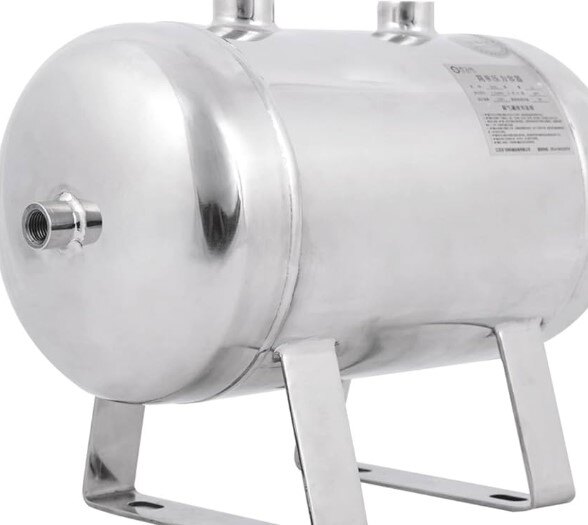
Both vacuum and pressure tanks play critical roles in industrial equipment. Key differences include:
- Concept: Pressure tanks operate above atmospheric pressure to store and transport liquids or gases, providing energy for industrial processes. Vacuum tanks operate below atmospheric pressure to facilitate extraction, drying, and material handling.
- Structural Design: Pressure tanks require thick walls and often spherical or cylindrical shapes to withstand internal pressure. Vacuum tanks resist external atmospheric pressure, often needing reinforced walls to prevent collapse.
- Applications: Pressure tanks are common in water supply, oil and gas storage, and chemical processing. Vacuum tanks are used in food and beverage vacuum evaporation and freeze-drying, pharmaceutical production, and aerospace simulations.
- Pressure Control: Pressure tanks rely on safety valves and gauges; vacuum tanks use vacuum pumps and vacuum gauges.
- Safety Risks: Pressure tanks risk explosion if overpressurized, while vacuum tanks risk implosion if poorly designed.
- Operational Costs: Pressure tanks require more energy to maintain high internal pressure, whereas vacuum tanks primarily consume energy for pumps and have lower maintenance costs.
Vacuum tanks play a vital role across industries, enabling fast, efficient collection and transport of materials, improving waste management, and enhancing operational efficiency. They safely manage hazardous substances, reducing risk, and help prevent environmental contamination.
Selecting the right vacuum tank involves considering working pressure, material type, operating environment, material selection, installation, and compliance with ASME standards. Stainless steel vacuum tanks, with their durability, hygiene, broad material compatibility, temperature stability, sustainability, and regulatory compliance, are often the preferred choice.
Whether for liquid waste management, industrial material handling, emergency response, or construction, vacuum tanks offer effective and safe solutions. Companies should weigh the advantages of ASME-compliant versus non-compliant tanks to make informed decisions based on their needs and budgets.
