In industrial production, heat exchangers play a crucial role, functioning as highly efficient thermal transporters that transfer heat from one medium to another, ensuring the smooth operation of production processes. The performance and lifespan of a heat exchanger directly affect not only the safety of production but also the economic benefits of the enterprise. Seamless steel tubes, as key components in heat exchangers, have an even more critical material selection process, as it directly determines the operational stability and service life of the heat exchanger.
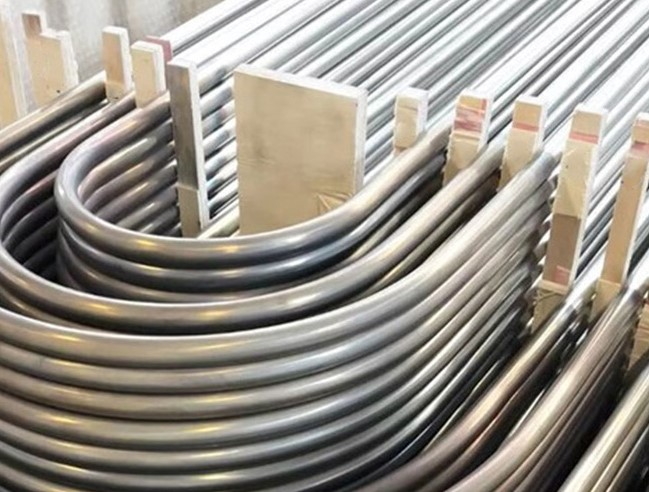
Seamless steel tubes are located at the core of the heat exchange process and must withstand high temperatures, high pressures, and chemical corrosion from the working medium. This requires seamless steel tubes to possess a series of critical performance characteristics.
- Strength and Plasticity: Firstly, seamless steel tubes must have good strength and plasticity. During heat exchange, the fluid pressure and the mechanical stress caused by thermal expansion and contraction will act on the steel tube. If the strength and plasticity of the steel tube are insufficient, plastic deformation and fatigue failure may occur, thus affecting the normal operation of the heat exchanger.
- High-Temperature Stability: Under high-temperature conditions, the material of the steel tube must not undergo thermal softening, oxidation, or a significant decline in mechanical properties. Heat exchangers generally need to operate stably for long periods in high-temperature environments. If the material's performance is unstable at high temperatures, it can lead to a decrease in the heat exchanger’s efficiency or even safety hazards.
- Oxidation and Corrosion Resistance: Depending on the medium, seamless steel tubes also need to have good oxidation resistance and corrosion resistance. Corrosive action of the medium can cause the steel tube to perforate or leak, leading to serious safety accidents. Therefore, selecting materials with good oxidation resistance and corrosion resistance is an important guarantee for the safe operation of heat exchangers.
- Thermal Conductivity: As the direct heat transfer wall of the heat exchange medium, the thermal conductivity of the steel tube directly impacts the heat transfer efficiency. Although the thermal conductivity of steel is relatively limited, by optimizing the thickness and structural design of the material, the heat transfer effect can be effectively improved.
- Process Adaptability: Seamless steel tubes should also be adaptable to processes such as welding, bending, straightening, and surface treatment to ensure smooth manufacturing of heat exchangers and the quality of the final product. In actual production, seamless steel tubes undergo a variety of processing methods. If the material has poor adaptability to these processes, it will affect the manufacturing quality and production efficiency of the heat exchanger.
Given the diverse operating conditions of heat exchangers, commonly used seamless steel tube materials primarily include carbon steel, alloy steel, and stainless steel.
- Carbon Steel: Carbon steel is an economical material suitable for conditions where the temperature does not exceed 400°C and the medium is not significantly corrosive. Carbon steel has moderate strength, good plasticity, and toughness, and can withstand the pressure under normal operating conditions. However, carbon steel is prone to oxidation and performance degradation at high temperatures, and its corrosion resistance is weak. It usually requires protective measures such as coatings or linings to enhance its performance. Carbon steel has excellent machinability and weldability and is widely used in general cooling water heat exchangers and low-temperature processes.
- Alloy Steel: Alloy steel improves strength and corrosion resistance by adding elements such as chromium, molybdenum, and nickel. Alloy steel has significantly better strength and heat resistance compared to carbon steel, making it suitable for medium- to high-pressure and temperature conditions. Compared to carbon steel, alloy steel is more resistant to oxidation and corrosion and can adapt to moderately corrosive environments. Alloy steel is also weldable and easy to machine. Typical grades such as 12Cr1MoV are widely used in high-temperature piping for boilers and heat exchangers.
- Stainless Steel: Stainless steel offers excellent corrosion and high-temperature resistance, making it an ideal choice for heat exchanger materials. The high toughness and good strength of stainless steel allow it to perform well in both oxidative and reductive media, with outstanding corrosion resistance. Stainless steel can be used for extended periods at temperatures above 600°C. Stainless steel also has good weldability, though it is relatively more difficult to form. Due to its outstanding properties, stainless steel is widely used in industries such as chemical, petroleum, and nuclear power, where high resistance to corrosion and heat is required.
When selecting seamless steel tube materials for heat exchangers, multiple factors need to be considered to ensure the material meets the actual working conditions.
- Temperature and Pressure: Temperature and pressure are primary factors influencing material selection. In high-temperature and high-pressure environments, materials must have high yield strength and creep resistance. High-temperature alloy steels and austenitic stainless steels are commonly used to meet such demands.
- Medium Characteristics: Different heat transfer media (such as water, steam, oil, acidic or alkaline solutions) exhibit varying levels of corrosive effect on materials. Carbon steel is suitable for non-corrosive or mildly corrosive media, but for conditions with corrosive media, stainless steel or special alloy steels should be used.
- Thermal Conductivity: The thermal conductivity of the material directly affects heat transfer efficiency. Although steel’s inherent conductivity is limited, optimizing thickness and design can effectively improve heat transfer.
- Cost and Economic Efficiency: Material cost and manufacturing difficulty directly influence the overall cost of the heat exchanger. While carbon steel is inexpensive, it requires more frequent maintenance and replacement. Stainless steel has a higher initial cost but a longer service life and better overall economic efficiency. Therefore, balancing material costs against service life is essential to avoid frequent replacements and repairs caused by cheap, poor-quality materials.
- Manufacturing Process Compatibility: The material must be adaptable to the seamless steel tube manufacturing processes, including hot rolling, cold rolling, heat treatment, and welding, to ensure the final product's quality and performance.
In shell-and-tube heat exchangers, the connection between the tube and the tube sheet is a key structure, requiring both leak-proof operation and resistance to the medium's pressure. Common connection methods include expansion, welding, and a combination of expansion and welding.
- Expansion is simple and cost-effective, suitable for situations where leakage will not cause severe consequences.
- Residual Stress: Residual stress arises from plastic deformation at the tube end during expansion. The stress will gradually disappear at high temperatures, weakening the seal.
- Applicable Conditions: Pressure generally ≤ 4 MPa, temperature ≤ 300°C.
- Material Hardness: Tube sheet hardness should be higher than the tube end to ensure expansion strength.
- Surface Roughness: Ra 12.5, hole type (smooth or with grooves) influences expansion quality.
- Welding is a widely used connection method, with the following features:
- Ease of Processing: No need for grooves in the tube hole or annealing or polishing of the tube end.
- High Strength: Welded joints provide high strength and resistance to pull-out. They can also be repaired if leaks occur.
- Convenient for Maintenance: Special tools can be used to remove leaking tubes, which is more convenient than expansion.
- This method is suitable for high-pressure, high-permeability, or single-side corrosion conditions to ensure an absolute seal. Common methods include expanding first then welding, welding then expanding, or welding then expanding with post-expansion:
- First Expansion then Welding: Improves weld fatigue performance but requires cleaning of expansion oil to prevent welding quality issues.
- First Welding then Expansion: Avoids oil contamination but can crack welds during expansion. The distance between the tube end and plate should be increased (about 16 mm) to prevent cracking.
Seamless steel tubes are indispensable key components in industrial heat exchangers, with material selection and connection processes determining their performance and lifespan. In practical applications, it is necessary to comprehensively consider factors such as strength, plasticity, high-temperature stability, oxidation and corrosion resistance, thermal conductivity, and process adaptability when selecting materials. At the same time, selecting the appropriate tube-to-tube sheet connection method ensures sealing and strength, which is essential for the safe and efficient operation of heat exchangers. By making scientific material selections and process designs, heat exchanger performance and service life can be effectively enhanced, contributing to industrial safety and economic efficiency.
