Storage tanks are essential equipment in chemical processing, petroleum refining, food production, pharmaceuticals, water treatment, power generation, and many other industrial sectors. Although a storage tank may appear to be a relatively simple vessel, its actual operating principle involves much more than simply holding a material inside a container. A properly engineered tank must accommodate material volume, chemical compatibility, temperature variation, pressure changes, loading and unloading, contamination control, structural loads, and operational safety.
The fundamental working principle of storage tank equipment can be understood through three interconnected functions: storage, protection, and management. The tank provides a controlled physical space for a material, protects the stored product and surrounding environment from unwanted interactions, and enables operators or automated systems to monitor and control inventory. Depending on the service, a tank may also incorporate heating or cooling systems, agitation, vapor management, pressure-vacuum protection, level measurement, fire protection, and automated transfer systems.
For industry professionals, understanding these functions is important because tank performance depends on the interaction between vessel design, stored medium, operating conditions, instrumentation, and maintenance practices. A tank that is appropriately designed for one service may be unsuitable for another, even if the two tanks have similar dimensions.
At its simplest level, a storage tank works by creating a controlled boundary between the stored material and the external environment. The tank shell, bottom, roof, lining, seals, nozzles, and associated equipment collectively form this boundary. The stored material remains inside the defined containment volume while process connections allow controlled filling, withdrawal, sampling, venting, drainage, cleaning, and inspection.
The engineering principle is therefore based on containment plus controlled interaction. The tank must contain the material under normal operating conditions while allowing the process system to interact with it in a predictable way.
A typical industrial storage system includes:
- Tank body – Provides the primary containment structure.
- Roof or cover – Limits contamination and controls vapor release.
- Inlet and outlet nozzles – Provide controlled material transfer.
- Vent or pressure-vacuum protection system – Manages pressure changes.
- Level instrumentation – Determines inventory and prevents overfilling.
- Temperature instrumentation – Monitors thermal conditions.
- Drain and sampling connections – Support operation and maintenance.
- Safety systems – Protect personnel, equipment, and the stored material.
- Supporting structure and foundation – Transfers mechanical loads safely to the ground.
The exact configuration varies according to whether the tank stores liquid, gas, powder, slurry, food products, chemicals, fuels, or other materials.
The first function of a storage tank is to provide sufficient capacity for the intended material inventory. Tank volume is determined by production requirements, delivery schedules, process residence time, emergency storage requirements, operating strategy, and available site space.
Nominal volume and usable working volume are not necessarily identical. A tank normally requires freeboard or vapor space above the maximum operating liquid level. This space accommodates thermal expansion, filling transients, foam, vapor generation, and other operational considerations.
For example, if a tank is nominally rated at 1,000 m³, operators may not be permitted to fill it completely to 1,000 m³ under normal operating conditions. The allowable working level may be lower to provide adequate operating margin and prevent overfill.
Tank capacity planning should therefore consider:
- Normal operating inventory
- Maximum operating level
- Minimum operating level
- Freeboard
- Thermal expansion
- Emergency capacity
- Sloshing or movement where applicable
- Future production requirements
The geometry of the tank affects structural behavior, fabrication cost, installation requirements, and material utilization.
Common tank configurations include:
| Tank type | Typical characteristics | Common applications |
|---|---|---|
| Vertical cylindrical tank | Efficient for large liquid volumes | Oil, chemicals, water |
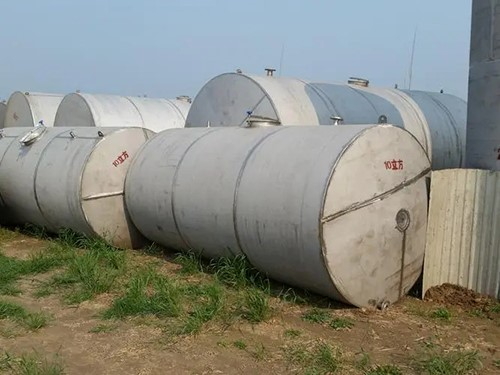
| Horizontal cylindrical tank | Compact and relatively low profile | Fuel, chemicals, utility liquids |
| Cone-roof tank | Atmospheric liquid storage | Water, chemicals, petroleum products |
| Floating-roof tank | Reduces vapor space exposure | Volatile petroleum products |
| Spherical tank | Efficient pressure containment | Pressurized gases and liquefied products |
| Rectangular tank | Useful for certain process layouts | Water and wastewater |
| Insulated tank | Reduces heat transfer | Temperature-sensitive materials |
The choice of geometry should be based on pressure, volume, material properties, temperature, site constraints, and applicable design standards rather than appearance alone.
Tank material selection is one of the most important aspects of storage-tank engineering. The material must withstand the chemical and physical conditions created by the stored medium throughout the expected service life.
Carbon steel is widely used for many industrial storage applications because it offers good mechanical strength and comparatively economical fabrication. Stainless steels such as 304 and 316/316L may be selected when corrosion resistance, hygiene, or specific chemical compatibility is required.
For highly corrosive services, engineers may consider special alloys, rubber linings, fluoropolymer linings, glass-lined construction, coatings, or other corrosion-resistant solutions.
The relevant material-selection factors include:
- Chemical composition
- Concentration
- Temperature
- Pressure
- Corrosion rate
- Erosion potential
- Abrasion
- Moisture content
- Chloride exposure
- Cleaning chemicals
- Required cleanliness
- Expected service life
A material that performs well at room temperature may behave differently at elevated temperature or under cyclic operation. Chemical compatibility should therefore be evaluated under the actual process conditions.
Where the structural material provides sufficient mechanical strength but does not have adequate corrosion resistance, a protective lining or coating may be used.
Common approaches include:
- PTFE or other fluoropolymer linings
- Rubber linings
- Glass lining
- Epoxy coatings
- Phenolic coatings
- Polyurethane coatings
- Specialized corrosion-resistant coatings
A lining does not simply “make any tank corrosion-proof.” Its thickness, adhesion, temperature capability, mechanical resistance, permeability, installation quality, and compatibility with the stored chemical must all be evaluated.
For example, a chemically resistant polymer lining may protect the metal substrate from an aggressive liquid, but mechanical damage during loading, cleaning, or maintenance can expose the underlying metal and create a localized corrosion site.
A storage tank must prevent unintended release of its contents while also controlling interaction with the atmosphere. This is especially important for volatile, toxic, flammable, corrosive, or environmentally sensitive materials.
Sealing systems may be found at:
- Manways
- Nozzles
- Access covers
- Floating roofs
- Agitator shafts
- Sampling points
- Instrument connections
- Drain valves
- Transfer connections
The sealing material should be compatible with the process medium and operating temperature. PTFE, EPDM, FKM, graphite, and other gasket or sealing materials may be selected according to service requirements.
For atmospheric tanks, sealing does not necessarily mean creating a completely closed vessel. The tank must usually have a properly designed venting arrangement so that pressure and vacuum do not exceed the allowable limits.
Even tanks that operate close to atmospheric pressure can experience significant internal pressure changes. Filling a tank introduces liquid and may displace vapor. Emptying a tank removes liquid and requires gas to enter the vapor space. Temperature changes can also cause the vapor volume and pressure to change.
Without adequate venting, these pressure changes can damage the tank.
A tank therefore needs a controlled gas-flow path that allows pressure equalization within the design limits. Depending on the service, this may involve:
- Atmospheric vents
- Pressure-vacuum relief valves
- Conservation vents
- Emergency vents
- Flame arresters
- Vapor recovery systems
- Nitrogen blanketing systems
For some chemical and petroleum applications, the vapor space is intentionally maintained under a controlled nitrogen atmosphere. This technique is commonly known as nitrogen blanketing or inert-gas blanketing.
The basic principle is to introduce inert gas when the tank pressure decreases and manage excess vapor or gas when pressure increases. By reducing oxygen exposure, nitrogen blanketing can help protect oxygen-sensitive materials and reduce the potential for flammable vapor-air mixtures in appropriate applications.
However, nitrogen systems introduce their own hazards. Nitrogen can displace oxygen in enclosed or poorly ventilated spaces, creating an asphyxiation hazard. Consequently, tank ventilation, confined-space procedures, gas detection, and safety management remain essential.
Some stored materials become highly viscous or solidify when their temperature decreases. Others require a controlled temperature to maintain product quality.
Heating can be provided using:
- Steam coils
- Hot-water coils
- Electrical heating elements
- External heating jackets
- Heat-transfer fluid systems
- Tank-bottom heating systems
The heating system should be designed to prevent localized overheating. Excessive wall or coil temperature can degrade sensitive products, accelerate corrosion, or create dangerous local conditions.
Cooling may be required for materials that are temperature-sensitive, volatile, or prone to thermal degradation. Cooling systems can use cooling-water coils, external heat exchangers, refrigeration systems, or other thermal-management methods.
Insulation is often used together with heating or cooling. Proper insulation reduces heat loss or heat gain and helps maintain a more stable internal temperature.
The thermal design must consider the entire tank system rather than the heating or cooling device alone. Tank material, insulation, nozzle arrangement, circulation, mixing, ambient conditions, and operating cycles all influence temperature uniformity.
Level is one of the most important parameters in tank operation. It determines how much material is available, prevents overfilling, protects pumps from running dry, and supports automated inventory management.
Common level-measurement technologies include:
- Radar level transmitters
- Guided-wave radar
- Ultrasonic level instruments
- Differential-pressure level transmitters
- Float and displacer systems
- Magnetostrictive level gauges
- Sight glasses
- Hydrostatic measurement
The best technology depends on the material and tank conditions. Foam, vapor, turbulence, condensation, high temperature, pressure, dust, and changing dielectric properties can all influence measurement performance.
A normal level transmitter should not always be treated as the only defense against overfilling. For critical storage systems, an independent high-level alarm or overfill protection system may provide an additional layer of protection.
The basic safety philosophy is to avoid relying on a single measurement or control path for a potentially severe consequence. Independent sensing, alarm, shutdown, and operator response can provide multiple layers of protection.
Storage tanks often use temperature and pressure instruments in combination with level measurement. These parameters provide information about both product condition and equipment health.
A temperature increase could indicate:
- External heat input
- Chemical reaction
- Cooling-system failure
- Abnormal process conditions
- Heater malfunction
An unexpected pressure change could indicate:
- Blocked venting
- Excessive vapor generation
- Gas ingress
- Temperature change
- Overpressure
- Vacuum development
Continuous monitoring allows operators to detect abnormal trends before they become serious equipment or process events.
The inlet arrangement must introduce material without creating unacceptable turbulence, splashing, static accumulation, or mechanical stress.
The appropriate inlet configuration depends on the material and tank geometry. Bottom filling, top filling, submerged filling, side-entry connections, and dip pipes may be used for different services.
For flammable liquids, the control of static electricity and vapor generation becomes particularly important. The transfer system may require bonding and grounding measures, controlled flow velocity, and appropriate equipment selection.
Tank outlets may connect directly to process pumps, gravity-drain systems, transfer pipelines, or downstream processing equipment.
The outlet design should account for:
- Required flow rate
- Pump suction conditions
- Cavitation risk
- Minimum operating level
- Drainability
- Sediment accumulation
- Isolation requirements
- Emergency shutdown requirements
For some tanks, the outlet is located above the bottom to avoid drawing settled solids into downstream equipment. In other applications, complete drainage may be essential, requiring carefully designed bottom outlets.
Not all storage tanks require agitation, but mixing can be essential when the stored material contains suspended solids, multiple liquid components, temperature gradients, or concentration gradients.
Agitators can help:
- Maintain uniform composition
- Prevent solids settling
- Improve heat transfer
- Maintain suspension
- Facilitate chemical reactions
- Prevent localized concentration differences
The agitator introduces mechanical loads to the tank through the shaft, mounting structure, and seals. Therefore, the tank roof or shell must be designed to withstand the associated forces and moments.
Mechanical seals or packing systems around rotating shafts must also be selected for the process conditions.
Storage tanks containing flammable liquids require particularly careful hazard assessment. The risk may arise from the liquid itself, vapor accumulation, static electricity, ignition sources, or external fire exposure.
Protection strategies may include:
- Appropriate tank spacing
- Fire detection
- Firewater systems
- Foam systems where applicable
- Pressure and vacuum protection
- Vapor-control systems
- Grounding and bonding
- Electrical equipment classification
- Emergency shutdown systems
- Overfill prevention
The exact protection strategy depends on the material, tank configuration, facility layout, regulatory requirements, and applicable standards.
For some services, flame arresters may be installed to reduce the possibility of flame propagation through a vent line under specified conditions. Vapor recovery systems can also capture or route displaced vapors rather than releasing them directly into the atmosphere.
These systems must be engineered as part of the complete tank and process design. A vent device should not be selected independently from the tank's pressure rating, vapor properties, operating conditions, and emergency scenarios.
Internal corrosion is strongly influenced by the stored medium and conditions at the liquid-vapor interface, bottom of the tank, welds, nozzles, and other geometrically complex areas.
Water accumulation beneath hydrocarbons, for example, can create a particularly aggressive corrosion environment at the tank bottom. Chemical tanks can experience localized attack when concentration or temperature varies.
Corrosion monitoring may involve:
- Visual inspection
- Ultrasonic thickness measurement
- Coating inspection
- Corrosion coupons
- Non-destructive examination
- Leak detection
- Historical thickness trending
External corrosion can result from rainwater, humidity, condensation, atmospheric contaminants, damaged coatings, or insulation-related moisture.
For outdoor tanks, protective coating systems and appropriate drainage are therefore essential. Tank foundations and bottom plates also require careful consideration because trapped moisture can create difficult-to-detect corrosion conditions.
Tank maintenance is closely related to product quality, corrosion control, and operational safety. Deposits can accumulate on tank bottoms, walls, heating surfaces, and internal components.
Typical maintenance activities may include:
- Removing residual material.
- Flushing or washing internal surfaces.
- Inspecting corrosion and coating condition.
- Checking welds and structural components.
- Inspecting valves and nozzles.
- Verifying level and temperature instruments.
- Checking vents and pressure-relief devices.
- Inspecting seals and gaskets.
- Measuring wall thickness where required.
- Documenting findings for future inspections.
The cleaning method must be compatible with the tank material and stored product. Aggressive cleaning chemicals, excessive pressure, or unsuitable mechanical tools can damage linings and coatings.
Large tanks are often classified as confined spaces or require confined-space controls during internal inspection. Entry can expose workers to toxic vapors, oxygen deficiency, flammable atmospheres, residual chemicals, and mechanical hazards.
Safe tank entry typically requires appropriate isolation, gas testing, ventilation, communication, rescue planning, and authorized procedures. The fact that a tank has been emptied does not necessarily mean it is safe to enter.
Modern storage facilities increasingly use digital instrumentation to manage tank inventories and operating conditions. A tank management system can collect data from level transmitters, temperature sensors, pressure instruments, flowmeters, valve position indicators, and other devices.
The data can support:
- Real-time inventory monitoring
- Batch management
- Material balance calculations
- Alarm management
- Leak detection
- Maintenance planning
- Production scheduling
- Energy management
- Historical trend analysis
Integration with SCADA, DCS, PLC, or enterprise systems allows tank information to become part of the plant's overall operational data architecture.
A modern tank can therefore be viewed as more than a passive container. It can function as a monitored asset that continuously reports its operating condition to the control system.
A systematic tank-selection process should begin with the stored material and operating requirements.
| Parameter | Why it matters |
|---|---|
| Stored medium | Determines compatibility and safety requirements |
| Capacity | Defines tank dimensions and operating inventory |
| Temperature | Influences material, insulation, heating and cooling |
| Pressure | Determines tank design and protection requirements |
| Corrosivity | Determines construction material and lining |
| Viscosity | Influences heating and pumping requirements |
| Volatility | Determines venting and vapor-control requirements |
| Flash point | Influences fire and explosion protection |
| Solids content | Affects bottom design and agitation |
| Outdoor exposure | Determines coating and environmental protection |
| Required cleanliness | Influences material and internal finish |
| Transfer rate | Determines nozzle and piping requirements |
| Inspection requirements | Influences accessibility and design |
This information should be established before finalizing the tank configuration.
Atmospheric tanks are commonly used for liquids whose vapor pressure and operating conditions permit storage at or near atmospheric pressure. They are widely used for water, wastewater, chemicals, fuels, and various process liquids.
Even though they are called atmospheric tanks, they still require proper venting and protection against both excessive pressure and vacuum. A tank can be damaged by vacuum conditions even if it never experiences significant positive pressure.
Pressurized vessels are used when the stored material requires pressure containment. Liquefied gases and certain volatile materials may require specially designed pressure vessels rather than conventional atmospheric storage tanks.
The engineering requirements become substantially more demanding because the vessel must withstand internal pressure and associated stresses. Pressure-vessel design, fabrication, inspection, and certification requirements therefore apply according to the applicable jurisdiction and service.
Some hazardous or environmentally sensitive materials require additional containment. Double-wall construction can provide secondary containment around the primary tank.
Other specialized designs include cryogenic tanks, refrigerated tanks, underground tanks, fire-resistant tanks, and temperature-controlled process vessels. Each design introduces specific engineering considerations that go beyond conventional atmospheric storage.
Storage tanks are designed and fabricated according to standards and regulatory requirements appropriate to their service. Depending on the tank type and jurisdiction, commonly encountered frameworks can include API standards, ASME pressure-vessel requirements, NFPA fire-protection standards, ASTM material standards, and local environmental and building regulations.
For example, API 650 is widely associated with welded tanks for oil storage, while API 620 addresses large, welded, low-pressure storage tanks. Pressure vessels operating under substantially different pressure conditions may instead fall under ASME Section VIII or another applicable pressure-vessel framework.
The correct standard must be established from the actual tank service, design pressure, temperature, geometry, stored product, jurisdiction, and project specification. Engineers should never assume that one tank standard applies to every storage application.
A reliable storage system does not depend on a single safety device. Instead, multiple protective layers work together.
A typical protection philosophy may be represented as:
Tank design → Material compatibility → Controlled filling → Level monitoring → Overfill protection → Pressure/vacuum protection → Fire protection → Leak detection → Inspection and maintenance
Each layer addresses a different failure mechanism.
For example, an overfill event may be prevented through normal level control. If normal control fails, a high-level alarm may alert the operator. If the condition continues, an independent shutdown or overfill-protection function may stop incoming flow. Physical containment and emergency response provide additional layers should material nevertheless escape.
This layered approach is fundamental to reliable industrial storage design.
The working principle of storage tank equipment is based on far more than simply storing a quantity of material inside a vessel. A properly designed tank must create reliable containment while managing pressure, temperature, material compatibility, filling and discharge, vapor behavior, inventory, corrosion, and operational risks.
The three fundamental functions—storage, protection, and management—are closely connected. Tank capacity and geometry determine how much material can be safely stored. Material selection, lining, sealing, insulation, and structural design protect the stored product and tank itself. Level, temperature, pressure, flow, and data-management systems allow operators to control inventory and identify abnormal conditions.
For industrial applications, the correct tank should therefore be selected according to the complete process envelope rather than capacity alone. Chemical composition, concentration, temperature, pressure, volatility, viscosity, corrosivity, environmental exposure, transfer requirements, fire hazards, maintenance strategy, and applicable standards all need to be evaluated.
As industrial facilities become increasingly automated, storage tanks are also evolving from passive containment equipment into intelligent process assets. With modern instrumentation, automated valves, digital monitoring, alarm systems, and predictive-maintenance technologies, storage systems can provide higher levels of operational visibility and control. Ultimately, the combination of sound mechanical design, appropriate materials, effective protection systems, accurate instrumentation, and disciplined maintenance determines whether a storage tank can deliver safe, reliable, and economical service throughout its intended lifecycle.
Previous: Common Reactor Problems and Solutions