In modern fermentation industries, the fermentation tank is the core equipment for carrying out microbial fermentation processes. Whether producing antibiotics and amino acids, or brewing wine and beer, fermentation tanks play a vital role. During the operation of a fermentation tank, pressure control is a key factor that cannot be overlooked. This article provides an in-depth discussion of the importance of fermentation tank pressure control, the methods used to achieve it, and its application in different fermentation processes, helping readers gain a comprehensive understanding of this complex yet essential process parameter.
The pressure inside a fermentation tank influences the fermentation process in multiple ways. First, pressure affects gas solubility. During fermentation, oxygen is essential for the growth and metabolism of many aerobic microorganisms. According to Henry’s law, the solubility of a gas in a liquid is proportional to its partial pressure. Therefore, appropriately increasing the pressure inside the fermentation tank can enhance oxygen solubility, providing microorganisms with a more sufficient oxygen supply and promoting growth and product synthesis.
However, increased pressure also raises the partial pressure of carbon dioxide, which may adversely affect the normal growth of certain microorganisms. For example, excessive carbon dioxide partial pressure may inhibit microbial respiration and disrupt metabolic pathways.
Second, pressure control is critical to the safe operation of fermentation tanks. Excessive internal pressure may cause gas leakage, equipment damage, or even safety accidents. Conversely, pressure that is too low may result in poor gas circulation, negatively affecting fermentation performance. In addition, in certain fermentation processes, maintaining appropriate positive or negative pressure can prevent external air from entering the tank, thereby avoiding oxygen interference in anaerobic fermentation, or preventing liquid leakage from the tank, ensuring hygiene and operational safety.
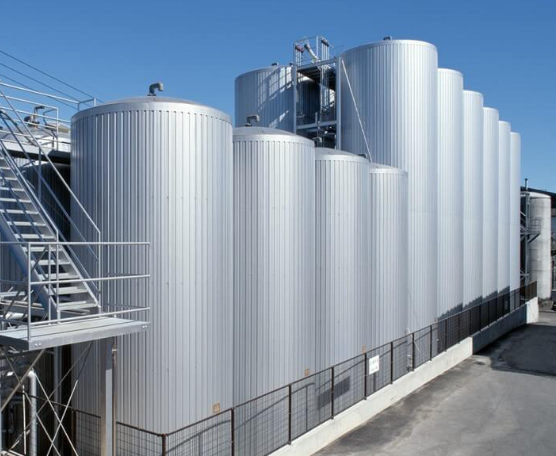
After understanding the importance of pressure control, a natural question arises: how is precise pressure control achieved in practice? The following section explores the main methods used in fermentation tank pressure control.
With continuous technological advancement, automated control systems have been widely adopted for fermentation tank pressure control. By installing pressure sensors in the fermentation tank, internal pressure changes can be monitored in real time. When the pressure deviates from the preset range, the automated control system adjusts valve openings according to predefined programs to maintain a stable pressure environment.
This automated approach not only improves control accuracy and stability but also reduces human error and labor intensity.
For example, in large-scale industrial fermentation tanks, Hall-effect pressure gauges or various remote pressure transmitters are used to convert pressure signals into electrical signals, which are then connected to control instruments. Based on the pressure readings, the control instruments automatically regulate valve operation, achieving precise pressure adjustment. This automated pressure control method offers significant advantages in large-scale production, ensuring process stability and consistent product quality.
For small fermentation tanks or experimental fermentation processes, manual adjustment of valve openings is also a common method of pressure control. Operators must closely monitor pressure gauge readings and adjust valves promptly based on actual conditions. Although manual control is less precise than automated systems, it remains a cost-effective and practical option for small-scale fermentation experiments with less stringent pressure requirements.
For instance, in laboratory-scale microbial fermentation experiments, due to the small tank volume and relatively simple experimental conditions, operators can control tank pressure through manual valve adjustments. In practice, operators rely on the characteristics of the microbial strain and the requirements of the fermentation process, combined with experience, to determine appropriate pressure levels and make timely adjustments.
After mastering pressure control methods, it is equally important to pay attention to several critical considerations. These details are essential for ensuring smooth fermentation and safe tank operation.
Excessive pressure inside a fermentation tank may result in gas leakage or equipment damage. When such situations occur, the first step is to check whether valves are improperly closed or damaged. Faulty valves should be repaired or replaced promptly.
Additionally, it is necessary to investigate whether abnormal factors during fermentation are causing excessive gas generation. For example, microbial contamination may lead to abnormal metabolism and excessive carbon dioxide production, while improper medium formulation can also affect gas generation. Appropriate corrective actions, such as replacing the microbial strain or adjusting the medium composition, should be taken accordingly.
When internal pressure is too low, gas circulation may be hindered, adversely affecting fermentation performance. In such cases, the tank should be inspected for gas leakage, and any leakage points should be identified and repaired promptly.
Furthermore, the condition of the pressure sensor should be checked. Sensor damage or excessive measurement error can lead to inaccurate pressure readings and poor pressure control. If a sensor malfunction is detected, it should be recalibrated or replaced to ensure accurate pressure measurement.
Fermentation processes vary widely, and different processes have distinct pressure control requirements that directly influence fermentation outcomes and product quality. The following sections analyze how pressure control is applied in various fermentation processes.
In certain fermentation processes, maintaining positive pressure is essential. For example, in anaerobic microbial fermentation, positive pressure helps prevent oxygen from entering the fermentation tank, thereby maintaining an anaerobic environment. Oxygen is toxic to anaerobic microorganisms and can disrupt their survival conditions, leading to fermentation failure. Therefore, pressure must be controlled within a specific positive range to ensure anaerobic stability.
In addition, positive pressure control effectively prevents liquid leakage. In fermentations involving high-value products, liquid leakage can cause significant economic losses. Maintaining positive pressure ensures tank sealing integrity and prevents leakage. It also prevents external contaminants from entering the tank, ensuring hygiene and process safety.
In other fermentation processes, negative pressure control is more important. Negative pressure facilitates the discharge of waste gases such as carbon dioxide generated during fermentation. Microbial metabolism produces large amounts of carbon dioxide, which can accumulate and increase tank pressure if not removed in time, adversely affecting fermentation performance. Maintaining negative pressure enables effective removal of waste gases and stabilizes internal pressure.
Negative pressure control also helps mitigate safety risks associated with excessive pressure. In large-scale fermentation tanks, excessive pressure may damage equipment or cause safety incidents. Maintaining negative pressure reduces internal pressure and enhances overall process safety.
Beyond single-mode positive or negative pressure control, some fermentation processes require switching between positive and negative pressure at different stages. In certain complex fermentations, microbial growth and metabolism demand varying environmental conditions.
For example, during the early fermentation stage, positive pressure may be required to prevent oxygen ingress, while in later stages, negative pressure may be necessary to remove waste gases. This positive–negative pressure switching must be flexibly adjusted according to specific fermentation requirements and process characteristics to ensure smooth operation.
How can pressure control be further improved to better meet fermentation process requirements? This leads to the important topic of optimization strategies. By continuously optimizing pressure control, fermentation efficiency can be enhanced, product quality ensured, and process safety and stability improved.
Different microorganisms exhibit varying pressure tolerance and responses. Therefore, pressure control strategies should be tailored to microbial characteristics. Some pressure-tolerant strains can grow and metabolize under higher pressure, while sensitive strains may be adversely affected by pressure fluctuations. In practice, pressure control strategies should be selected based on strain tolerance ranges and growth characteristics to ensure normal growth and optimal fermentation efficiency.
Pressure requirements differ across fermentation stages. In the early stage, lower pressure may promote microbial growth and reproduction, while in later stages, higher pressure may enhance product synthesis and accumulation. Pressure control should therefore be optimized according to specific process requirements.
For example, in pressurized fermentation, gradually increasing pressure in stages allows better process control and avoids adverse effects caused by premature or delayed pressurization.
With technological progress, new pressure control technologies and equipment continue to emerge. Advanced pressure sensors offer higher accuracy and stability, enabling more precise measurement of internal pressure changes. Meanwhile, intelligent automated control systems can adjust pressure dynamically based on real-time fermentation data, achieving more precise and stable control.
The adoption of these advanced technologies can significantly improve pressure control performance, thereby enhancing fermentation efficiency and product quality.
Beer fermentation is a major application within the fermentation industry, and pressure control plays a crucial role in beer quality and production efficiency. Beer fermentation generally consists of two stages: primary fermentation and secondary fermentation.
- During primary fermentation, yeast breaks down sugars and produces carbon dioxide. Maintaining appropriate pressure at this stage promotes carbon dioxide dissolution and release. Excessive pressure may cause carbon dioxide to escape too quickly, affecting foam stability, while insufficient pressure may result in inadequate carbon dioxide dissolution, negatively impacting taste.
- In the early stage of primary fermentation, diacetyl formation begins, and generated carbon dioxide and undesirable volatile compounds should be removed promptly. Therefore, fermentation is typically conducted under atmospheric or slight pressure (0.01–0.02 MPa). When apparent attenuation reaches about 30%, the first yeast budding cycle is complete, and tank sealing with pressure increase begins.
- When apparent attenuation reaches approximately 60%, the second yeast budding cycle is complete, and fermentation enters its vigorous phase. At this stage, tank pressure should be raised to its maximum, generally 0.07–0.1 MPa. Maintaining stable pressure during this vigorous phase facilitates diacetyl reduction and carbon dioxide saturation.
- In the later stage of primary fermentation, diacetyl reduction is largely complete, and pressure should be gradually reduced until fermentation ends. This approach aids in removing residual diacetyl while preventing excessive leakage of intracellular yeast components and avoiding pressure-differential damage to yeast cells. Through this staged pressure control strategy, beer quality and production efficiency can be significantly improved.
Fermentation tank pressure control plays an extremely important role in the fermentation industry. Proper pressure control optimizes fermentation processes, improves product quality, and enhances production efficiency. In practice, pressure control strategies should be flexibly adjusted based on microbial characteristics, fermentation processes, and tank capacity.
The adoption of automated control systems and advanced pressure control technologies enables more precise and stable pressure management. In summary, fermentation tank pressure control is a complex yet critical process parameter that requires continuous experience accumulation and strategy optimization to achieve optimal fermentation outcomes.
