In the vast and intricate landscape of modern industry, pressure vessels play an indispensable role. Equally critical, yet often overlooked, are the pressure vessel flanges that serve as the cornerstone of their stable and safe operation. From the complex processes of petrochemical plants to cutting-edge sectors such as power generation and nuclear energy, and even extending to routine production in light industries, pressure vessel flanges are ubiquitous, silently ensuring the uninterrupted functionality of critical equipment. Despite their seemingly ordinary appearance, these industrial components are vital for maintaining operational safety and efficiency. This article provides an in-depth exploration of pressure vessel flanges, their design, functionality, and the challenges associated with their use.
For a pressure vessel, a flange is not merely an isolated part. It is a composite assembly comprising the flange disc, a gasket, and connecting bolts or studs with nuts. The primary mission of a flange is to securely unite different pressurized components of a vessel while ensuring that the connection surfaces are perfectly aligned and sealed, leaving no room for leakage.
Imagine the potential consequences if even the tiniest gap were to form at a flange joint. Considering that pressure vessels often contain high-temperature, high-pressure, flammable, explosive, or toxic media, a leak could have catastrophic results. Potential hazards include fires, explosions, toxic gas releases, and severe damage to the vessel itself, nearby equipment, and the safety of personnel. Consequently, the design and selection of flanges prioritize overall sealing performance above all else, as it directly correlates with operational safety.
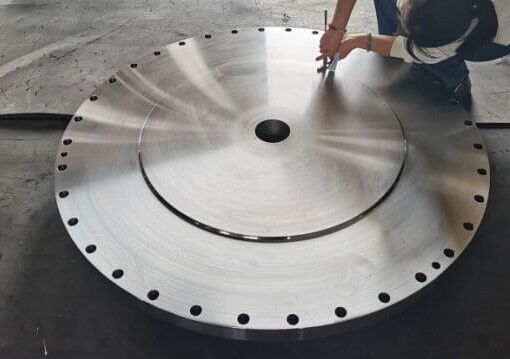
Pressure vessel flange seals can generally be categorized into three main types: gasketed or forced seals, self-tightening seals, and semi-self-tightening seals. Each type has distinct characteristics, advantages, and applications depending on operating conditions.
Forced seals function much like using a powerful adhesive to bind two boards tightly together. In this approach, the seal is achieved by mechanically compressing the sealing surface using bolts or studs to generate a predetermined clamping force.
A typical example is the flat gasket seal, where a flat gasket is placed between the flange sealing surfaces, and the pre-tension of the bolts ensures adequate compression. Another variant is the “Kazari” seal, which relies on a similar principle. While forced seals are effective under moderate pressure conditions, they are more susceptible to leakage when exposed to high pressures due to uneven surface stress or insufficient gasket material performance.
Self-tightening seals are more “intelligent” in their operation. They exploit the internal pressure of the vessel medium to enhance the sealing force automatically. As the internal pressure rises, the compressive force on the sealing surface increases correspondingly, maintaining reliable sealing even under high-pressure conditions.
Examples include:
Composite seals, where multiple sealing elements work together, and internal pressure aids the sealing effect.
O-ring seals, which deform elastically under pressure to fill gaps and maintain contact.
C-ring and B-ring seals, functioning on similar pressure-assisted deformation principles.
Wedge-shaped seals, octagonal and elliptical gaskets, flat gasket self-tightening types, Wood seals, and nitrogen-pressure seals, all of which are designed for specific operating scenarios. Each seal type is optimized for different pressures, temperatures, and media, offering engineers flexible solutions.
Semi-self-tightening seals combine the advantages of both forced and self-tightening seals. They utilize internal pressure while also relying on mechanical fasteners to generate sufficient sealing force. The double-cone seal is a prime example, performing well in complex conditions and providing a balanced approach for reliability and adaptability.
The effectiveness of a flange seal depends heavily on the interplay between bolt pre-tension and gasket compression. When bolts are initially tightened, the clamping force transfers through the flange to compress the gasket, producing a preload or initial gasket stress. This initial stress acts as a safety threshold, creating a baseline barrier against fluid leakage.
Once the vessel is pressurized, the bolts undergo tensile stress, and the flanges tend to separate slightly. As a result, the clamping force on the gasket decreases, reducing the compression and potentially compromising the seal. At this stage, the gasket’s elastic recovery becomes crucial. A high-quality gasket can compensate for flange separation, maintaining sufficient compression above the operational sealing stress. Conversely, if the gasket’s recovery is inadequate, the seal may fail, leading to leakage.
This complex interaction illustrates the delicate balance of forces that engineers must consider when designing and installing flanges for pressure vessels.
Flat welding flanges, commonly used on pressure vessels, are classified into Type A and Type B:
- Type A Flat Welding Flange: Welded directly to the vessel, typically with smaller weld dimensions or without bevels. Its design does not ensure that the flange and vessel experience equal stress, so strength calculations must reference slip-on flange methods.
- Type B Flat Welding Flange: Includes a short, thick cylinder section, ensuring a reliable weld between the flange and the cylinder. This design allows the flange and vessel to share stress uniformly, and strength calculations can consider the assembly as a single unit. Type B flanges are widely applied in medium- and low-pressure vessels and pipelines.
Type B flanges exhibit greater rigidity than Type A, making them suitable for larger diameters and higher pressures. The weld groove design also differs: Type A uses a V-groove, while Type B uses a U-groove, allowing for better weld penetration and higher overall strength and stiffness.
- Bolt Preload: Preload acts as the initial clamping “command” on the sealing system. Appropriate bolt tension ensures that the gasket retains sufficient stress during operation. Excessive preload can damage or extrude the gasket, while insufficient preload risks leakage. The distribution of bolt load is also critical. Uniform force distribution can be achieved by increasing the number of bolts where space permits, ensuring even compression and consistent sealing performance.
- Gasket Material: Gaskets serve as the cushion in the sealing system. Material selection is crucial. A suitable gasket must deform elastically under applied preload without damage, providing sufficient recovery to maintain contact with the flange as operational conditions fluctuate. Common materials include metals such as copper, aluminum, or low-carbon steel; non-metals such as asbestos substitutes, rubber, or PTFE; and composite materials like spiral-wound gaskets. Material properties must match the operating pressure, temperature, and medium.
- Flange Sealing Surface: The geometry and surface quality of the flange sealing face significantly influence seal integrity. Advanced face types like raised-face, tongue-and-groove, and ring-joint flanges are used for critical applications. Flatness, perpendicularity to the flange axis, and surface roughness must be controlled to ensure uniform gasket compression and prevent leakage. Even minor surface defects, scratches, or cracks can compromise the seal.
- Flange Rigidity: Insufficient flange stiffness can result in excessive bending and seal failure. Rigidity can be improved by increasing flange thickness or diameter, ensuring bolt forces are transmitted evenly across the gasket. Reducing the lever arm of bolt forces also minimizes flange bending moments, enhancing seal reliability.
- Operating Conditions: Temperature, pressure, and chemical properties of the medium affect flange performance. High temperatures can reduce medium viscosity, increase leakage potential, accelerate chemical corrosion, and induce creep or stress relaxation in bolts and flanges. Understanding and accommodating these conditions is essential for long-term reliability.
Pressure vessel flanges face extreme demands in terms of load, temperature, and medium. They must withstand static and cyclic loads, high and low temperatures, and contact with a variety of media, including air, steam, hydrogen sulfide, LPG, ammonia, chlorine, and corrosive acids or bases.
Unlike other components, flanges on pressure vessels cannot simply be shut down for maintenance. Sudden downtime may disrupt production lines, entire plants, or even regional supply chains, resulting in substantial economic losses. Furthermore, local stress concentrations near openings or discontinuities can lead to fatigue failure, particularly if manufacturing flaws such as microcracks remain undetected.
Typical combined pressure vessels consist of a shell, heads, flanges, gaskets, openings, and supports. Cylinders form the main pressure-containing components, sized according to process requirements and taking shapes like cylindrical, conical, or spherical. Heads act as caps and can be spherical, elliptical, dished, or flat. For safety, only spherical or elliptical heads are used with flanged connections; flat heads are prohibited due to poor sealing and structural limitations.
Flanges connect the vessel to pipelines by compressing gaskets with bolts. Various openings are integrated for human access, instrumentation, and material inlets and outlets. Gaskets, placed between flange faces or between the head and cylinder, are compressed by bolts to prevent leakage. Selection depends on pressure, medium, and temperature, with options including metallic, non-metallic, and composite materials.
Although seemingly just one component among many, the pressure vessel flange carries immense responsibility. From ingenious sealing designs to careful control of influencing factors, from selecting appropriate flange types to ensuring stable operation under complex conditions, every detail reflects meticulous engineering expertise.
As industrial technology advances, pressure vessel flanges continue to evolve with better materials, more precise designs, and stricter manufacturing standards. The future promises flanges that provide even more robust protection, ensuring the safe, efficient, and continuous operation of industrial production. In essence, these unassuming components will remain silent guardians, safeguarding industrial processes and the people who rely on them.
